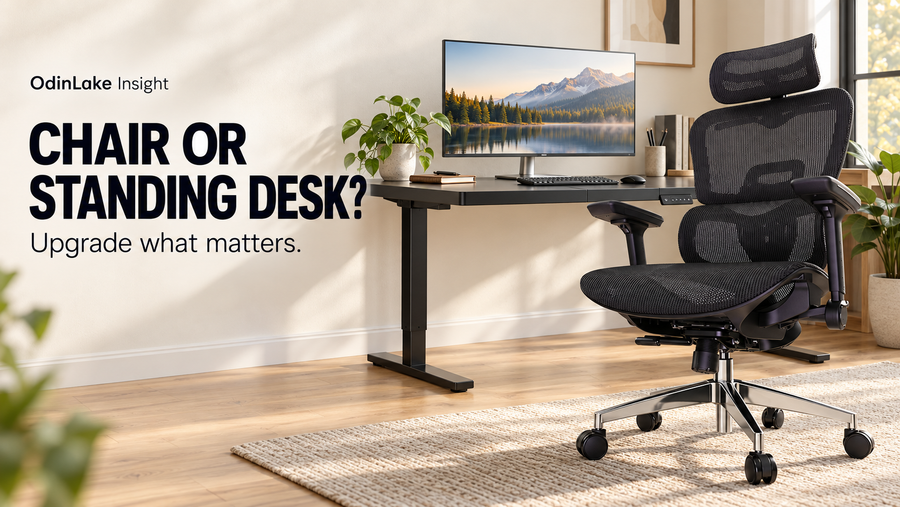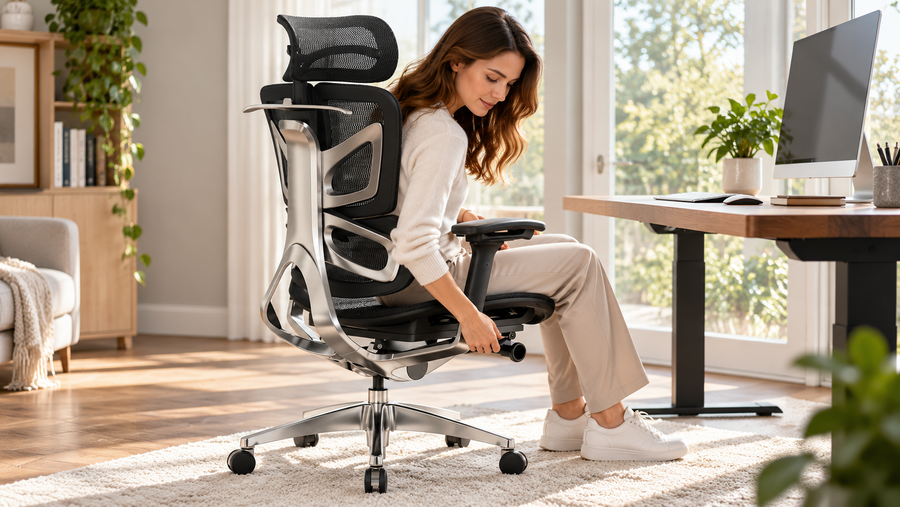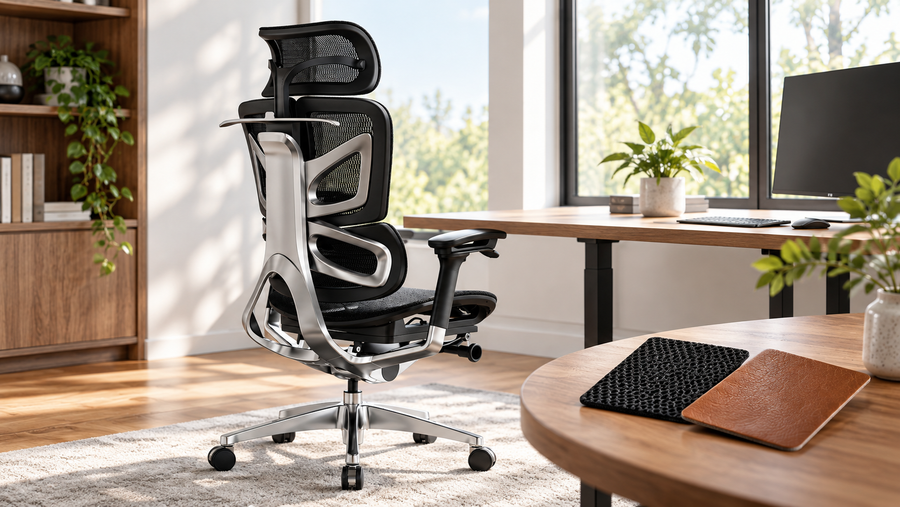
The right ergonomic setup should adapt to your body, support frequent movement, and stay comfortable through a full workday.
A well-made office chair used daily typically lasts around five to ten years, while budget models often wear out in two to five. Heavy use, a poor match to your body weight, and neglected maintenance can shorten that range, and good care can push it longer. Below, we look at what actually decides how long your chair survives and how to get more years out of it.
6 Factors That Affect Office Chair Lifespan
1. Build Quality and Materials
The frame, base, gas lift and mechanism take the most stress. Steel and reinforced nylon bases hold up better than thin plastic ones. Foam density matters too: high-density foam springs back, while cheap foam compresses and leaves you sitting on the frame.
2. Daily Hours of Use
A chair in a spare room used two hours a day ages very differently from a chair that carries someone through eight or nine hours of work. Commercial and heavy-use environments wear out moving parts much faster, so check whether a chair is built for full-day use.
3. User Weight and Sitting Habits
Every chair has a weight rating. Staying well within it reduces strain on the gas lift and frame. Habits matter as well: dropping heavily into the seat, tilting back on two casters, or perching on the edge puts repeated shock loads on the mechanism.
4. Gas Lift Condition
The gas lift is the part most likely to fail first. When a chair slowly sinks while you sit, the seal inside the cylinder has worn. Gas cylinders are commonly graded by class, and heavier-duty ones generally last longer under sustained use.
5. Seat and Back Material
Mesh can stretch or sag over years, especially in hot rooms. Foam can flatten. Leather and faux leather can crack, and the cheaper coatings may peel. Each material ages in its own way, so check how the one you choose behaves over time.
6. Environment and Maintenance
Sunlight, dry air, humidity, pets and carpet fibers all take a toll. Dust and hair around the casters slow wheels down and strain the base. A chair kept clean and tightened regularly simply lasts longer.
Typical Lifespan by Chair Type
| Chair Type | Typical Range | Common Failure Point |
|---|---|---|
| Budget task chair | 2-5 years | Foam flattening, gas lift sinking |
| Mid-range ergonomic chair | 5-8 years | Armrest wear, casters |
| Premium ergonomic chair | 8-12+ years | Upholstery or mesh aging |
| Gaming-style chair | 3-6 years | Faux leather peeling |
These are broad estimates. Usage and care move them more than the category name does.
Signs It Is Time to Replace Your Chair
- The seat sinks even after you adjust the height.
- The backrest no longer holds its position or wobbles.
- Foam is flat or you feel the frame through the cushion.
- You wake up or finish the day with new aches that were not there before.
- Armrests loosen and cannot be tightened.
- Cracks appear in the base or the frame.
If only one part has failed, such as casters, a gas lift or armrest pads, replacing that part is often cheaper than replacing the chair. If several parts are tired at once, a new chair is usually the better value.
How to Make Your Office Chair Last Longer
- Check the weight rating and stay under it. Do not sit on the armrests or stand on the seat.
- Sit down gently. Avoid dropping into the chair.
- Clean the casters every few months. Pull out hair and debris, and wipe the wheel axles.
- Tighten bolts periodically. Seat, back and armrest screws loosen from daily use.
- Wipe and vacuum the upholstery. Use gentle cleaners that suit the material you have.
- Keep it out of direct sun and away from heaters. Heat dries and cracks many materials.
- Use a chair mat on carpet. It reduces caster drag and wear.
- Rotate your use. If you have a second seat, such as a stool, sharing the load helps.
Is a More Expensive Chair Worth It?
Often, yes, when the extra cost goes into the parts that wear: the gas lift, the mechanism, the base and the warranty. Price alone is not proof of quality, so look at the warranty length, the replacement parts available and whether the manufacturer publishes real specifications.
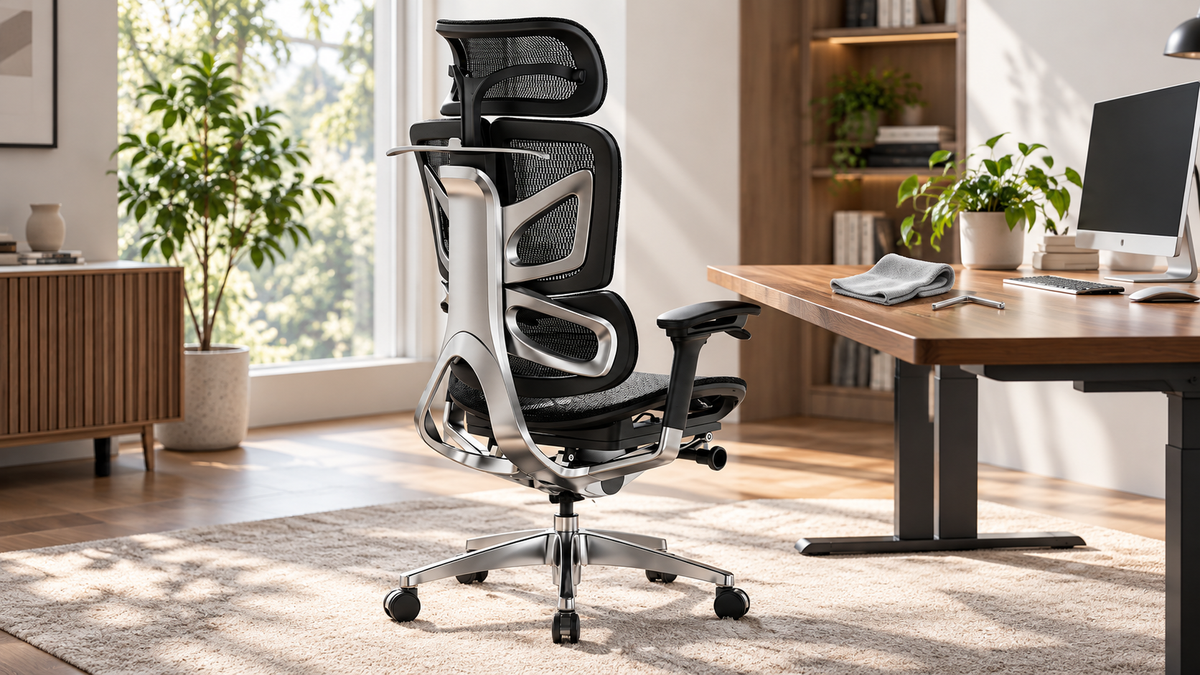
If you are comparing options, the OdinLake ergonomic chair collection lists the models with their features, and the OdinLake O3 (Ergo BUTTERFLY 753) is one to start with.
FAQ
How often should I replace my office chair? There is no fixed date. Replace it when comfort or stability drops and repairs no longer make sense, which for many chairs is somewhere between five and ten years.
Why does my office chair keep sinking? The gas lift cylinder has likely lost pressure. Replacing the cylinder is usually inexpensive compared with replacing the chair.
Can I replace just the gas lift or casters? Yes. Both are standard parts in many chairs, though you need to match the size and fit.
Does a warranty tell me anything about lifespan? It indicates how long the manufacturer expects key parts to hold up, so a longer warranty is a useful, if imperfect, signal.
Conclusion
An office chair's lifespan depends mostly on build quality, how many hours you sit, and how well you care for it. Choose a chair rated for your use, maintain it a few times a year, and replace it when comfort drops.