Quick answer
The right ergonomic setup should adapt to your body, support frequent movement, and stay comfortable through a full workday.
A saddle chair may look unusual at first, but its distinctive seat shape has a practical purpose: it offers an alternative to the flat seat of a conventional office chair. Once associated mainly with clinics and specialist workspaces, saddle-style seating now appears in home offices, studios, and creative corners. Here is what a saddle chair is, how it works, and how to tell whether one belongs in your space.
-
What Is a Saddle Chair?
A saddle chair is a seat with a contoured, saddle-inspired surface that encourages the legs to angle downward or outward rather than remain in the same position as on a broad, flat office-chair seat. Many models use a padded upholstered seat, a height-adjustable gas lift, and a wheeled base. Some have a backrest, while others are backless saddle stools.
Dental professionals, therapists, artists, salon workers, and people working at desks may use saddle seating, although different tasks require different designs. Prices vary widely: basic saddle stools can be relatively inexpensive, while more adjustable professional or design-focused models can cost several hundred dollars. For a current price on any specific model, check its official product listing rather than relying on a general category estimate.
-
What Are the Features, Benefits, and Drawbacks of a Saddle Chair?
A saddle-shaped seat can encourage a more open hip position and make it easier to approach a work surface without a bulky chair in the way. Many saddle chairs are compact, height adjustable, and easy to swivel between tasks. A backrest-equipped version adds an option to lean back between activities. However, the unfamiliar shape may require an adjustment period, and a seat that is too wide, narrow, or high can create discomfort. Saddle seating is not a treatment for back pain, nor is it automatically better than a conventional ergonomic chair for every body or task. The right fit and the ability to change positions matter more than the label.
-
How Does a Saddle Chair Work?
Instead of keeping the thighs nearly horizontal, the saddle contour can let them slope downward and outward. This changes the angle between the torso and thighs and can influence how the pelvis is positioned. The user adjusts seat height until the feet are supported and the work surface can be reached without raised shoulders. A swivel base allows the body to turn toward nearby tasks instead of repeatedly twisting the torso. On models with casters, the chair can also move short distances around a workstation. The exact posture depends on the seat design, individual anatomy, desk height, and how the chair is adjusted.
-
Who Will Love a Saddle Chair?
Saddle seating may appeal to people who move frequently between tasks, need to reach equipment from different directions, or want a chair that occupies less visual and physical space. It can be useful for crafts, sewing, drawing, beauty work, light desk work, and other activities involving frequent turns or short changes of position. A compact saddle chair with a backrest can also suit a bedroom desk or a reading corner where a large high-back office chair would feel out of place.
It may be less suitable for someone who wants deep reclining, a broad conventional seat, extensive armrest and lumbar adjustments, or continuous full-day computer work. People with persistent pain or specific mobility needs should evaluate fit carefully and seek qualified advice when appropriate.
-
What Types of Saddle Chairs Are There?
-
Traditional backless saddle stool: A simple saddle-shaped seat on a height-adjustable base. Often used in clinical or task-focused settings where access and movement matter more than leaning support.
-
Saddle chair with backrest: Adds a backrest for intermittent support. It can suit mixed activities and users who want somewhere to lean between focused tasks.
-
Split-seat saddle chair: Uses two separate seat sections rather than one continuous saddle. Its pressure distribution and fit differ from a one-piece design, so personal fit is essential.
-
Professional or high-range saddle stool: Typically emphasizes working-height adjustment, reach, and frequent movement for specialized workstations; it may sit higher than a standard desk chair.
-
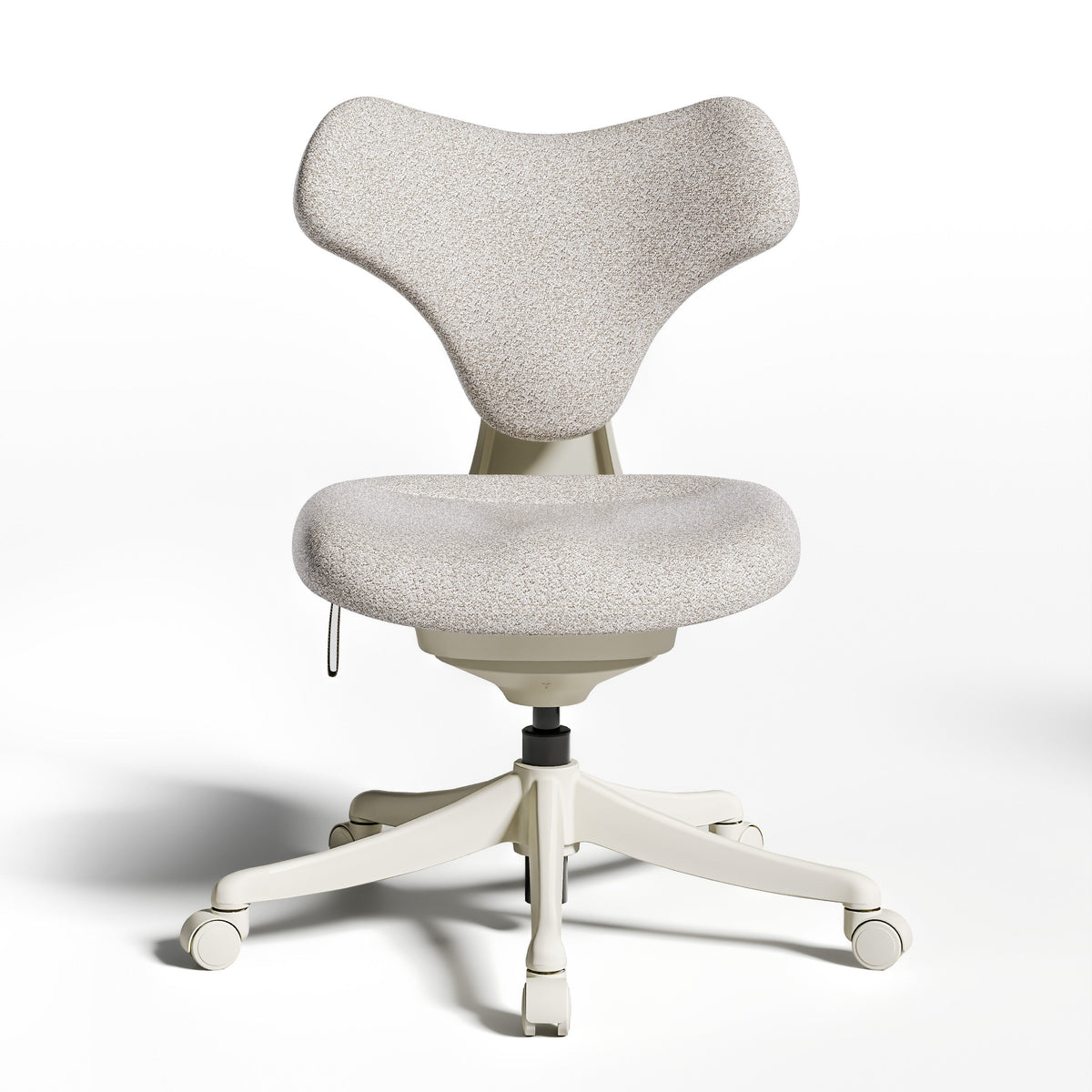
Compact home-friendly saddle chair: Combines saddle-inspired contours with softer upholstery and proportions intended for small living spaces. This is the category closest to OdinLake C1 Arc.
Saddle chair vs office chair: a traditional ergonomic office chair usually prioritizes a larger backrest, prolonged desk support, and multiple adjustments. A saddle chair prioritizes a different hip-and-leg position, reach, and mobility. Neither category replaces the need to check the actual dimensions and adjustments.
-
How to Choose the Best Saddle Chair
-
Check the seat-height range: Compare the published seat-height range with your desk and your own seated elbow position. Do not assume every saddle chair requires a tall desk.
-
Check the saddle width and shape: A seat that is too wide or too narrow can create pressure or an awkward leg position. The contour should support you without forcing an uncomfortable straddle.
-
Decide whether you need a backrest: For brief task-based work, a backless stool may be enough. For reading or mixed work-and-break moments, a backrest can be useful.
-
Match the chair to your task: Crafting, salon work, desk typing, and long gaming sessions place different demands on reach, stability, and upper-body support.
-
Measure your available space: Check overall width, depth, clearance beneath the desk, and whether the base and casters can move safely on your floor.
-
Review materials and maintenance: Look at upholstery, foam support, caster quality, and the manufacturer’s cleaning guidance.
-
Read the actual return and warranty terms: Fit is personal. Check the current policy, assembly requirements, and whether the seller offers useful support before ordering.
-
How to Clean and Maintain a Saddle Chair
Dust or vacuum the seat and seams regularly using a soft brush attachment. For upholstered surfaces, use a lightly dampened soft cloth and a mild cleaner only if the manufacturer permits it; test an inconspicuous area first. Avoid soaking the foam, using abrasive brushes, or applying harsh solvents. Check the casters for hair and debris, and keep the gas-lift and moving mechanisms free from spills. Periodically inspect visible fasteners and follow the manufacturer’s instructions for tightening or service. Specific upholstery-care instructions always take priority over generic advice.
-
Best Saddle Chair for Compact Living: OdinLake C1 Arc
For someone who wants saddle-inspired seating without bringing a large office chair into a bedroom, studio, or small home office, the OdinLake C1 Arc is a compelling option. It combines a contoured padded saddle-inspired seat with a compact curved backrest, 360-degree swivel, smooth-rolling casters, and approximately 3.1 inches of height adjustment. The design is intended to move between desk work, reading, crafts, and everyday living rather than function as a specialized clinical stool.
The official product page lists an overall width of 20.5 inches, depth of 23.4 inches, and weight of approximately 28 pounds. OdinLake also publishes a seat-height range of approximately 17.3–20.5 inches in its desk-fit guide. These details make it worth considering for smaller spaces, but you should still measure your desk, legroom, and preferred working height before ordering.
Choose C1 Arc if you want a home-friendly appearance, flexible seating, and a compact backrest. Choose a larger, fully adjustable ergonomic office chair instead if your priority is prolonged uninterrupted computer work with extensive lumbar, armrest, and recline adjustment. For shoppers who fall into the first group, the C1 Arc is the product to compare against your own measurements.
Explore: Explore OdinLake ergonomic chairs
-
Final Thoughts
A saddle chair is not simply a smaller office chair: its contoured seat changes how the hips and legs are positioned and can make turning between tasks feel more natural. The best option depends on the seat shape, desk height, available space, and whether you need a backrest. If your daily routine moves between focused work and everyday activities in a compact room, a home-friendly design such as OdinLake C1 Arc deserves a closer look.
-
Frequently Asked Questions
Is a saddle chair good for your back?
A well-fitted saddle chair may support a comfortable, more open sitting position, but it cannot guarantee pain relief or replace movement and appropriate workstation setup.
Can you sit in a saddle chair all day?
Tolerance varies. Build up gradually, change positions, and consider a full-size ergonomic chair for prolonged uninterrupted computer sessions.
Is a saddle chair better than an office chair?
Not universally. Saddle chairs can favor movement and compactness; full-size office chairs often offer more extensive adjustments and back support.
Do saddle chairs need a special desk?
Not always. Match the chair’s seat-height range, your seated elbow height, and the desk’s underside clearance. Some higher professional stools may need a taller surface.
What is the difference between a saddle chair and a saddle stool?
The terms often overlap, but a saddle chair commonly includes a backrest while a saddle stool is often backless.
Are saddle chairs comfortable for beginners?
They can be, but the seat shape may feel unfamiliar. Start with shorter sessions, adjust the height, and reassess if you notice pressure or discomfort.
How much does a saddle chair cost?
Prices depend on construction, adjustability, and intended use. Check current product listings; OdinLake C1 Arc pricing and promotions may change.
Is OdinLake C1 Arc suitable for small spaces?
Its compact dimensions and lightweight visual profile are designed for small home workspaces, but measure your available floor space and desk clearance before buying.