The right ergonomic setup should adapt to your body, support frequent movement, and stay comfortable through a full workday.
A thick office chair cushion looks reassuring in a product photo. There seems to be plenty of padding between you and the seat base, which makes it tempting to compare chairs by inches alone.
This article focuses on the cushion built into an office chair. A separate pad placed on top of an existing seat changes the setup differently, particularly its sitting height.
Thickness describes the integrated cushion before you sit on it. It does not tell you how far you will sink, where the front edge will meet your thighs, or how much room you will have beneath the desk.
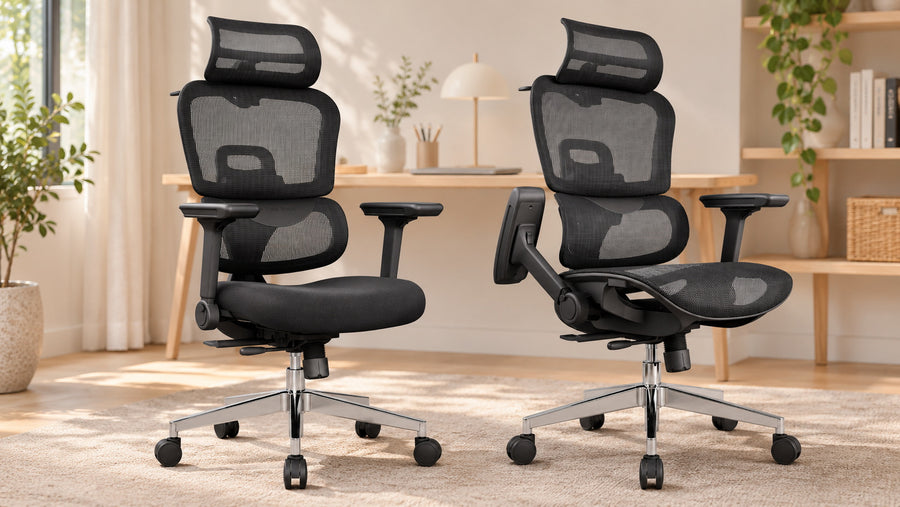
There is no single cushion thickness that suits every person. The useful question is whether the padding, shape, and seat adjustment work together for your body. The OdinLake L3 CozyCloud provides a practical example of how to assess a generously padded seat without treating its thickness as the whole buying decision.
Start With the Cushion Under Your Weight
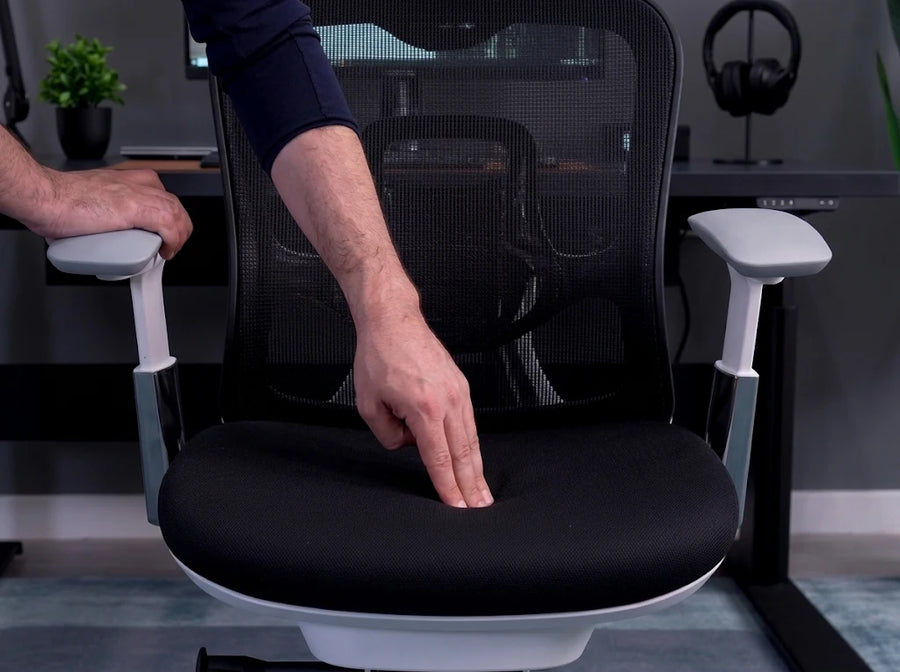
Two equally thick cushions can feel quite different. One may compress readily as you settle onto it; another may offer more resistance. The amount of padding visible from the side does not show how either one will behave beneath you.
Think of thickness as available space for cushioning. Whether that space works well depends on the foam and the complete seat construction. If you quickly feel the rigid base, the seat may not provide enough usable cushioning for you, even if it looks substantial.
The opposite is worth checking too. If you sink farther than you enjoy, you may find it awkward to move into your typing position. Adding more depth to that cushion would not necessarily make it a better fit.
For shopping purposes, this means you need more than a side-profile measurement to judge a seat. Look for cushioning that works under your weight, not simply the largest number in a specification table.
When trying a padded chair, sit with your weight fully on the seat rather than resting on its front edge. Notice whether the cushion provides a comfortable buffer from the base while letting you change position normally. A quick hand press is useful for feeling the surface, but it cannot reproduce the way your body loads the whole seat.
Check the Front Edge and the Usable Seat Area
A cushion can have plenty of padding in the middle and still feel uncomfortable at the front. That is why its shape deserves as much attention as its maximum thickness.
Look at where the top surface transitions into the edge. Then check how that area meets your thighs when you sit back. You should not need to slide forward just to stop the edge pressing behind your knees.
Seat depth affects this directly. A long cushion may look generous, but extra length is not useful if it prevents you from reaching the backrest comfortably. Conversely, a seat that is too short may leave you wishing for more support beneath your thighs.
OSHA’s chair guidance recommends an appropriately sized seat with depth adjustment and a rounded front edge. The practical aim is thigh support without contact between the seat edge and the backs of the knees.
When comparing dimensions, separate seat width, seat depth, and cushion thickness. They answer different questions. A thicker cushion does not make a narrow seat wider, and a wide cushion does not guarantee suitable clearance behind your knees.
Also look beyond the outer upholstery. Rounded fabric edges and decorative piping can make a seat appear fuller without showing how much of that area is comfortable to sit on. Your usable seating area matters more than the outline in a photograph.
What the L3 CozyCloud’s Thickness Tells You
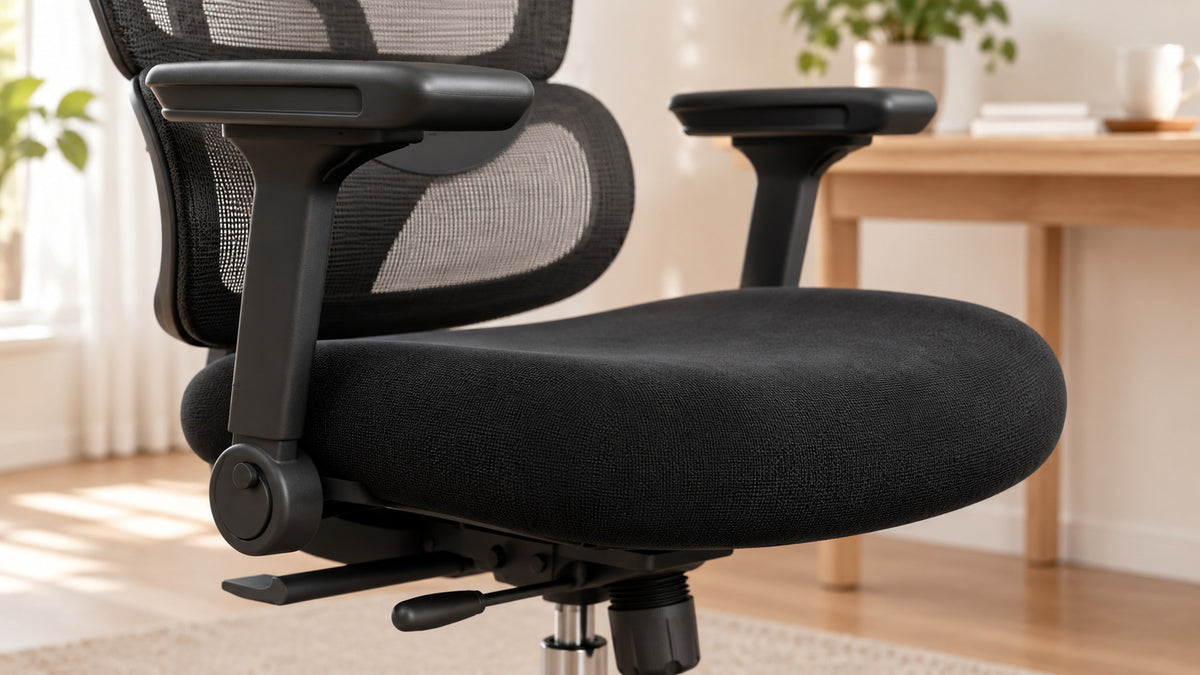
The OdinLake L3 CozyCloud has a 3.15-inch cushion with high-resilience foam. That specification describes its padded construction; it is not a universal recommendation that every office chair needs the same thickness.
For someone who dislikes a thinly padded seat, it is a useful reason to consider CozyCloud. There is a clear cushion layer to evaluate, rather than relying on upholstery over a minimal amount of padding.
To put that measurement in context, compare it with what you dislike about your current seat. If you feel the base beneath you, fuller padding is relevant. If the cushion already feels comfortable but takes up too much space beneath a desk drawer, added thickness may move you in the wrong direction.
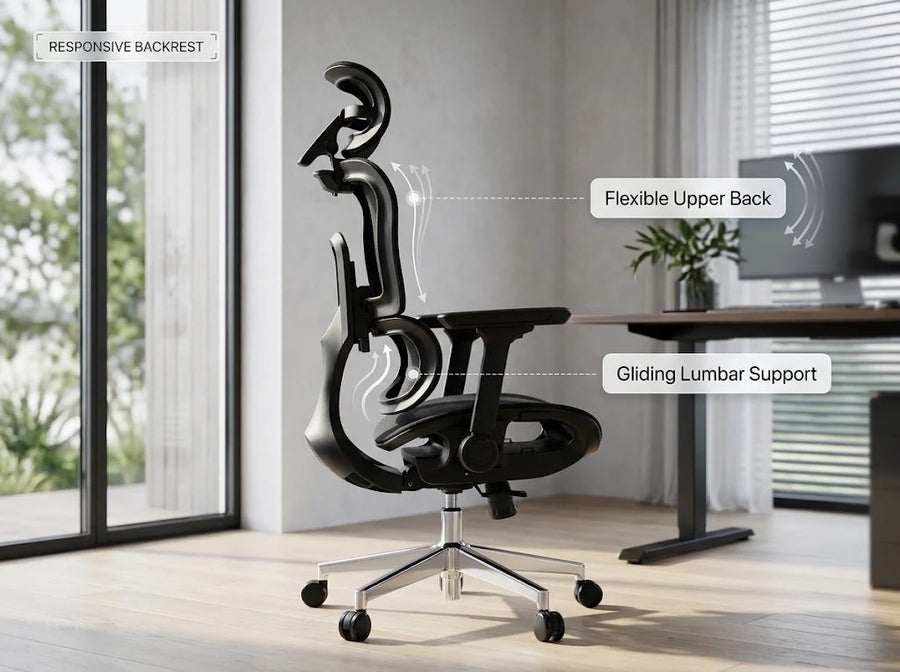
With CozyCloud, evaluate the cushioning and the space it occupies together. Its depth-adjustable seat lets you position the front edge, while the chair’s height adjustment lets you find a workable sitting level. The cushion measurement is one part of that complete arrangement.
Include the Cushion in Your Desk Fit
A seat does not work independently of the desk. You still need to sit at a height that lets you use the keyboard comfortably and keep your feet supported.
This matters particularly when adding a loose cushion to an existing chair. Extra padding raises your sitting position and changes where your body meets the backrest and armrests. It can also reduce the useful gap beneath a desk or drawer.
An integrated cushion, such as CozyCloud, is part of the chair’s overall seat design. Even so, assess the complete chair at your workstation. Check your seated position rather than adding the advertised cushion thickness to the seat-height range yourself; manufacturers may measure those dimensions differently.
Choose thickness as part of a complete fit decision. Enough comfortable padding, a suitable shape, and workable adjustments are more useful than winning a comparison by an extra inch.
FAQ
Should a heavier person always choose a thicker cushion?
Thickness alone cannot answer that. Check the chair’s rated capacity, usable seat dimensions, and whether the cushioning remains comfortable under your weight. A thicker seat is not a substitute for a suitable frame, mechanism, or fit.
Can I compare a removable seat pad with an integrated chair cushion?
Compare the complete seated position, not just the measurements. A removable pad sits on top of an existing seat, while an integrated cushion is designed around its own base. The same stated thickness can produce different results when combined with those different structures.