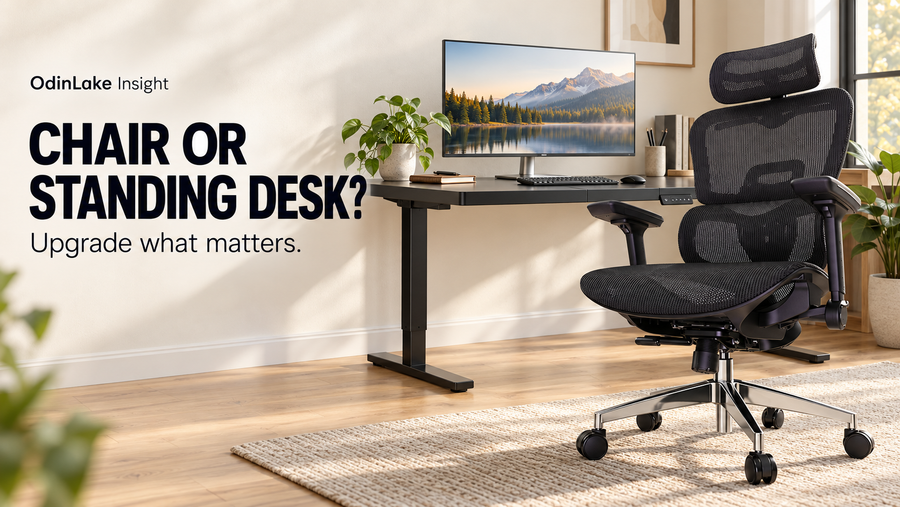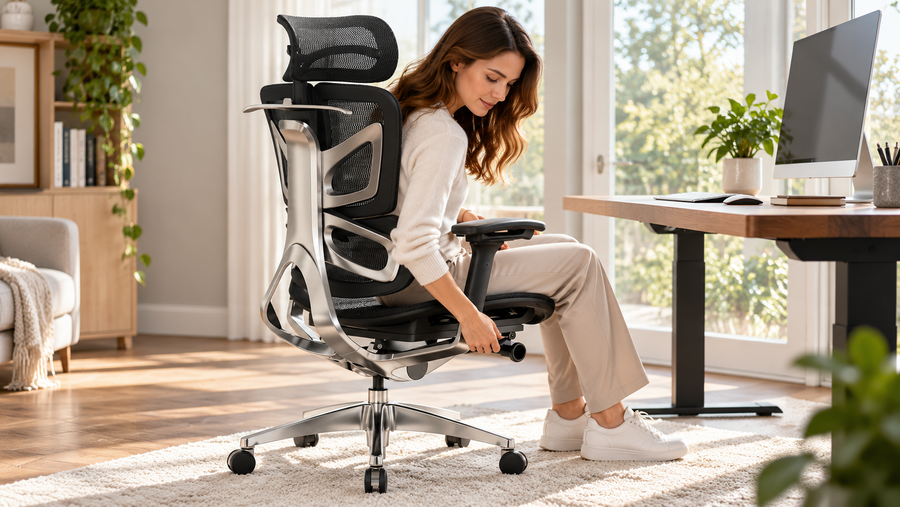
The right ergonomic setup should adapt to your body, support frequent movement, and stay comfortable through a full workday.
Office chairs do not come in one universal size, even though most product pages make them look that way. A chair that fits a tall person well can leave a shorter person's feet dangling, and the reverse can squeeze a larger person in the hips. This guide explains the measurements that matter and how to match them to your body and your desk.
What Does "Office Chair Size" Mean?
When people talk about chair size, they usually mean several separate measurements:
- Seat height: the distance from the floor to the top of the seat.
- Seat width: how wide the sitting surface is.
- Seat depth: how far the seat extends from the backrest to the front edge.
- Backrest height: how tall the back support is.
- Weight capacity: the maximum user weight the chair is built for.
- Overall footprint: the width of the base, which affects how the chair fits in your room.
Looking at only one of these, such as backrest height, tells you very little about the fit.
How to Measure Yourself
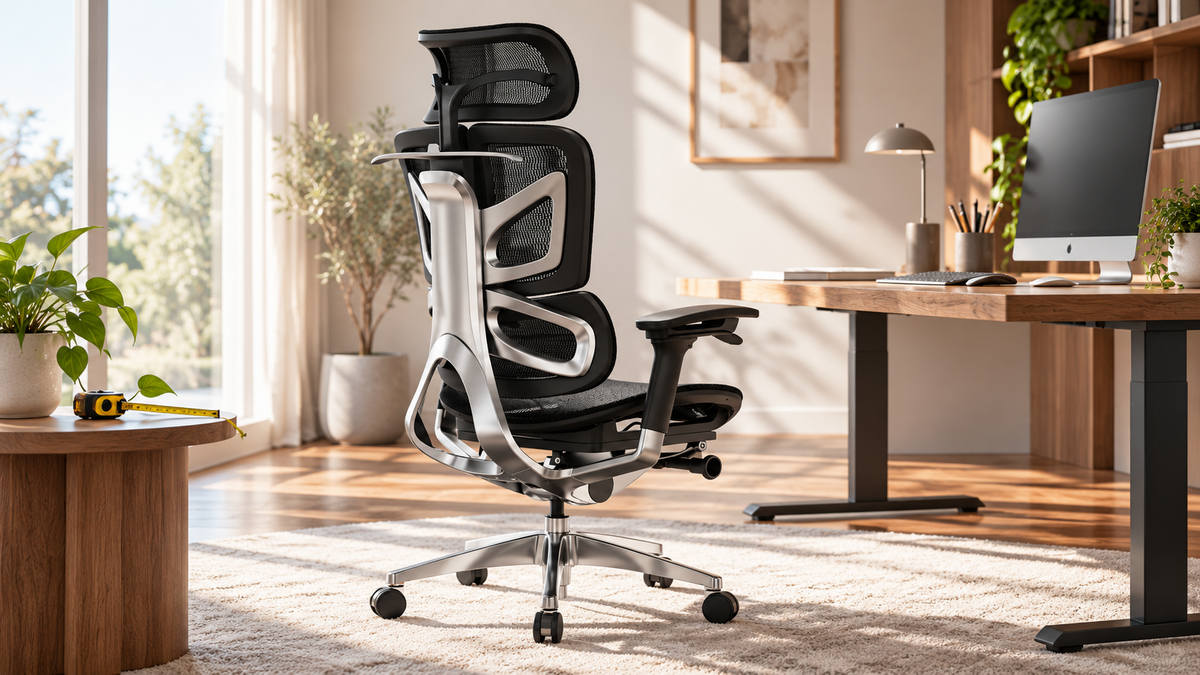
You only need a tape measure and a flat wall.
- Seat height target: Sit on a firm, flat seat with your feet flat on the floor and knees at about a right angle. Measure from the floor to the back of your knee. That is roughly the seat height you want.
- Seat depth target: Measure from the back of your hips to the back of your knee. The seat should be a little shorter than this, so there is a gap of about two to three fingers between the seat edge and your knee.
- Seat width target: Measure the widest part of your hips and add a little room on each side so you can shift position.
- Torso length: Measure from the seat surface to the top of your shoulders. This guides how tall the backrest should be.
Write these numbers down and compare them against the product specifications.
How to Match the Chair to Your Space
Measure your desk as well. Your elbows should rest comfortably at keyboard height when your shoulders are relaxed. If your desk is fixed and high, you may need a chair that goes higher and a footrest to keep your feet supported.
Also check:
- Desk clearance: Armrests should slide under the desk, or the chair will sit too far away.
- Room footprint: Leave space to roll back and rotate without hitting walls.
- Doorways and carpet: A wide base on thick carpet may roll poorly.
Size Guidelines by Body Type
These are starting points rather than rules, since proportions vary a lot between people.
| Situation | What to Prioritize |
|---|---|
| Shorter users | Low minimum seat height, shallower seat or depth adjustment, footrest if needed |
| Taller users | High maximum seat height, deeper seat, taller backrest, longer gas lift |
| Larger or heavier users | Higher weight rating, wider seat, sturdy base and gas lift |
| Small desks or rooms | Compact base, armrests that tuck under |
Office Chair for Tall People
Tall users often find that standard chairs end at the shoulder blades, leaving the upper back unsupported, and that the seat height does not reach high enough to keep the thighs level. Look for an extended gas lift, a deeper seat or a seat slide, and a taller backrest or adjustable headrest.
Office Chair for Shorter People
If your feet do not reach the floor, the front of the seat presses on the back of your thighs. A lower minimum height and a seat that is not too deep help here. A footrest is a simple fix when you cannot lower the chair far enough because your desk is high.
Common Sizing Mistakes
- Choosing by the "big and tall" label without reading real numbers.
- Ignoring seat depth, which is more important than most people think.
- Forgetting the weight rating.
- Buying a chair that cannot fit under the desk with the armrests in place.
Find the Right Fit
Compare the numbers above against the specifications on the product page, and use the return window to test the fit. You can browse the OdinLake ergonomic chair collection, or look at the OdinLake O3 (Ergo BUTTERFLY 753) and check its listed dimensions against your own measurements.
FAQ
What size office chair do I need? It depends on your leg length, hip width and desk height. Use the measurements above and compare them with the specs rather than choosing by label.
How deep should an office chair seat be? You should be able to sit fully back and still keep a gap of roughly two to three fingers between the seat edge and the back of your knees.
Are wider seats always better? No. A seat that is too wide can push armrests out of reach and make it harder to sit with good posture.
Do I need a different chair if I use a standing desk? You may need a higher maximum seat height for sitting at the raised desk, depending on how you use it.
Conclusion
Size is a set of measurements, not a single label. Measure your legs, hips and desk, compare them with the specifications, and test the fit before you commit.