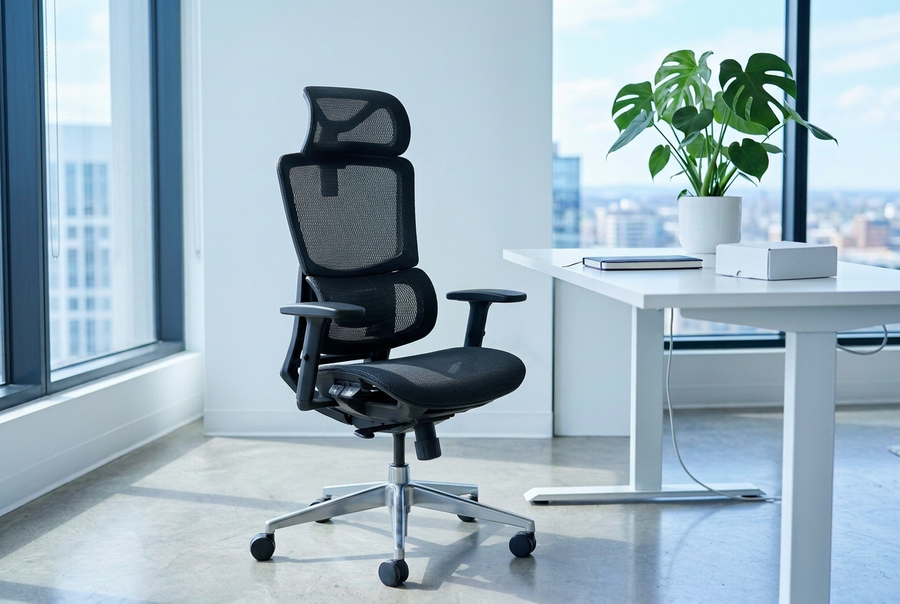
A repeat customer told me our mesh feels cheap—and that his wife sits wrapped in a blanket. His feedback reminded me that the best chair isn’t defined by its material, but by how well it fits the person sitting in it.
The right ergonomic setup should adapt to your body, support frequent movement, and stay comfortable through a full workday.
The most useful feedback I've ever received started with a sentence I didn't want to read: the mesh feels cheap.
Not "it broke." Not "it arrived late." A judgment about the material we had built our line around.
Most founders will tell you to welcome criticism. What they don't tell you is that the criticism worth the most is usually the kind that makes you want to argue.
The Email I Almost Defended Against
If you read my earlier piece on patience, you may remember a customer who spent weeks researching chairs for his wife. He didn't want mesh. He wanted adjustability above everything else, and he ordered our O2 (Ergo MAX 747).
What I didn't mention is what happened next. He came back and ordered a second one — this time for himself, for his own office.
When he reordered, our team wrote to thank him and to ask a few honest questions: how he found us, what he'd noticed, what we could do better. His answers were generous and specific. On what we could improve, he wrote:
"Offer at least a fabric material, or ideally a top-grain leather option. Wife is always cold sitting in her 747. She wraps in a blanket because the mesh offers zero warmth. For me, the mesh feels cheap. I know it's widely used for chairs; however, my preference is for something a bit more substantial."
— A repeat customer (anonymized, lightly edited for spelling)

I read that twice.
I wasn't angry, and I didn't want to argue. I understood him. Over the years, some customers have told us a chair isn't right for them — the feel, the fit, something we missed. Many more have told us it fits them perfectly: comfortable, the right size, exactly what they needed. Both are true.
And this man had bought two of our chairs. He liked the adjustability enough to come back. He still told us plainly what he didn't like. That is not a complaint. It's a gift.
Why I Built Around Mesh
The honest answer isn't on a spec sheet.
On paper, I'd call it breathability. In truth, it was personal.
In 2018, I was working more than 16 hours a day on an ordinary office chair. It had no adjustments and a thin foam seat. Even in an air-conditioned room, it held heat after hours of sitting. Over time, my thighs broke out in small rashes, which I'm convinced came from the heat. Later, I bought my first ergonomic chair — I wrote about it in my first piece.
So when I started designing chairs of my own, I knew what I wanted to be rid of. I run hot. Mesh felt like the answer. Nobody talked me into it, and no market report told me to. I built for the person I know best: myself, and people who run hot like me.
But breathable isn't enough on its own. I know how mesh can fail: it can tear or sag after long use, and some mesh is rough from the very first day. So from the very beginning, the goal was mesh that feels smooth and comfortable from day one, stays breathable, and holds its shape through long hours of sitting without sagging or tearing. We tested ours for durability and abrasion, across several dimensions. I won't list the numbers here. I'd rather let the market and our customers be the proof, because that's the only proof that really counts.
Strength is something we can test. How a surface feels to the person sitting on it is something only they can tell us.
What I hadn't thought about enough was the person who is nothing like me. His wife runs cold. The chair I had built for people who run hot had found someone who runs cold, and she was wrapping herself in a blanket to sit in it.
I had designed for the person I am. I had not thought enough about the person I'm not.
A customer's email once taught me that disappointment is information. This customer taught me that a preference is information too — even when nothing is broken.

The Best Chair Is the One That Fits You
Here is what that email finally made me say out loud: a good chair isn't good in itself. It's good for someone.
People sit in different rooms. Some offices run warm and open; some are cold and air-conditioned. People feel temperature differently. And people judge quality differently — some by what they see, some by what they touch.
None of these is wrong. They are simply different, and a single surface can't answer all of them.
That's why I don't think of this as mesh versus everything else. The best chair isn't the one with the best material. It's the one that fits the person sitting in it.
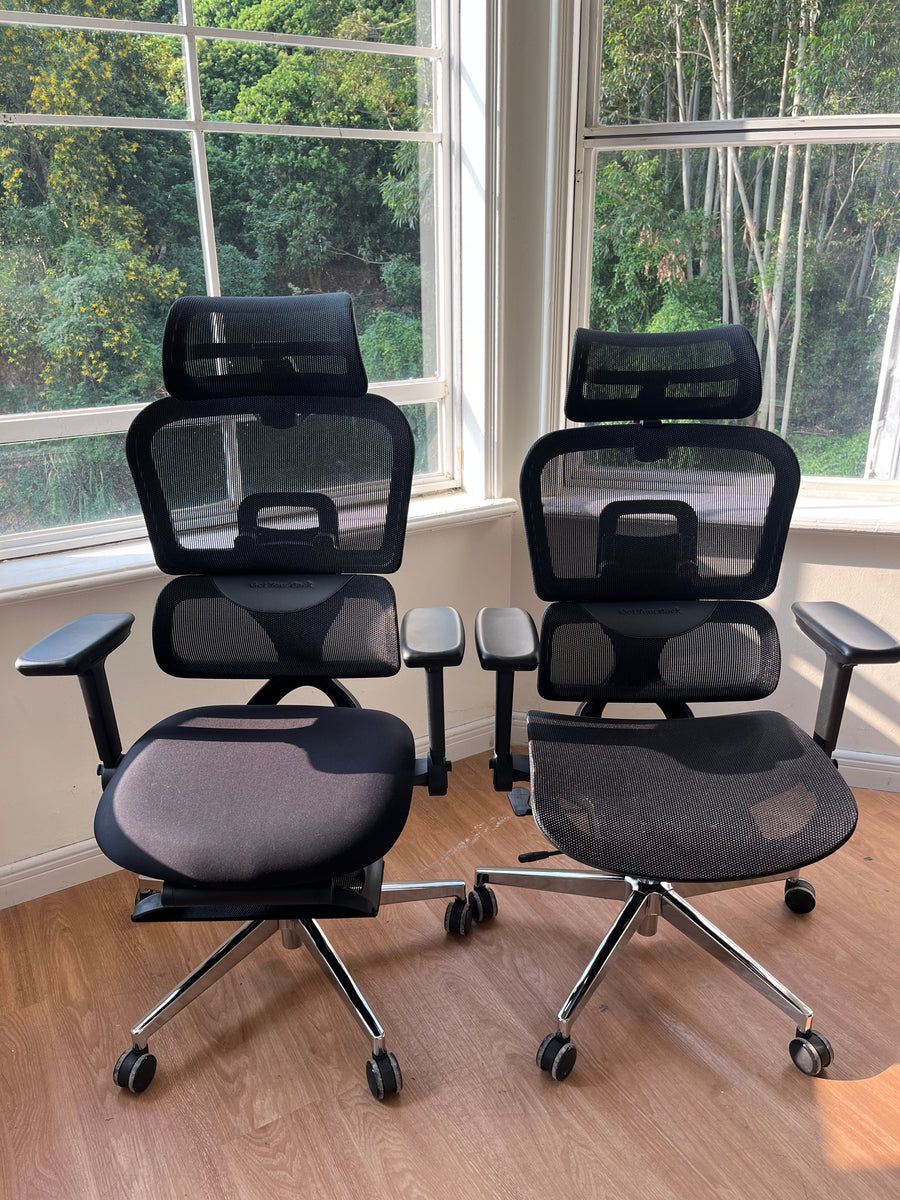
It's also why we haven't stopped at mesh. Our OdinLake L2 (Ergo PRO 633) has a foam seat cushion. Our newest chair, the OdinLake L3 (CozyCloud), goes further: a soft, springy foam under a smooth yoga-fabric cover.
These aren't a verdict on mesh. They're an answer to customers who told us what they needed. We will keep gathering feedback, and we will keep listening.
Three Questions Before You Choose a Surface

If you're deciding between mesh and something softer, here is what I would ask myself:
- Where will this chair live? A warm, open room and a cold, air-conditioned one ask different things of a surface.
- How do I judge quality — by looking, or by touch? If a surface has to feel substantial to you, trust that.
- Can I test it the way I actually sit? As I wrote in my first piece, the real test isn't the first three minutes. Sit for an hour in your own environment before you decide.
If your answers point away from mesh, that's a useful answer — and we'd genuinely like to hear what you chose and why.
Got Your Back, Even When It's Hard to Hear
People assume Got Your Back means we'll defend you. Sometimes it means something less comfortable: that we'll listen when you tell us the chair isn't quite right.
He told us the truth. That is the most generous thing a customer can do for a company, and the least we can do is act on it.
Lex Zhao is the founder of OdinLake, an ergonomic chair company focused on long-term stable support for people who spend 8–12 hours a day at a desk. He writes about building, patience, and what it actually means to design for health — not just comfort.