A calm, evidence-based guide to gas-lift chair failures, stop-use signals, safe external checks, and model-specific replacement decisions.
The right ergonomic setup should adapt to your body, support frequent movement, and stay comfortable through a full workday.
Yes, a gas-lift office chair can suffer a sudden pressurized or structural failure, but that is different from a fuel or fire explosion. The cylinder beneath the seat is a sealed, pressurized component. A properly specified, undamaged chair should not eject parts in normal use, yet official workplace guidance has documented cylinder failures in which parts were forcefully expelled.
There is no reliable public incidence rate that lets us assign every office chair a meaningful percentage risk. The useful question is therefore not "How scared should I be?" but "Does this specific chair show a stop-use signal?" Sudden wobbling or tipping, visible cylinder damage, a cracked base, an unknown modification, or an abrupt change in behavior deserves action. A chair that merely sinks is usually presenting a different service problem, not proof that an explosion is imminent.
What People Mean When They Say an Office Chair "Exploded"
Most height-adjustable office chairs use a gas-lift cylinder between the seat mechanism and the five-star base. The cylinder converts internal gas pressure into controlled vertical movement when the height-release mechanism is activated.
The word explode can blur together three different events:
- Combustion: fuel ignites and burns. This is not how a normal chair gas lift operates.
- Pressure-vessel failure: a damaged or compromised cylinder releases stored pressure suddenly.
- Structural separation: the cylinder, seat plate, base hub, fastener, or another load-bearing part fails and the chair drops, tips, or comes apart.
The distinction matters because a dramatic drop or separation does not identify the failed part by itself. The UK Health and Safety Executive's workplace seating guidance notes that gas-pedestal chairs contain compressed gas and records incidents involving metal-fatigue cylinder failures. The same guidance says that a chair which suddenly wobbles or tips should not be examined or repaired by the user; the supplier or manufacturer should be contacted.
Inspect the Chair Without Taking It Apart

Do this check with the chair unoccupied, in good light, and without removing covers or applying tools. If the chair is already badly tilted, separated, cracked, or making a new violent movement, stop there and keep people away from it.
- Seat and mechanism zone: Look at the underside of the seat from a safe angle. Check for a visibly bent plate, missing hardware, an opening seam, or movement between parts that should remain joined.
- Cylinder zone: Visually check the accessible cylinder and protective shroud. Stop if you see a deep dent, major corrosion, a bulge, a puncture, heat damage, a weld, tool damage, or signs that the pressure tube was altered. Do not remove the cylinder to get a closer look.
- Base-hub zone: Check where the cylinder enters the five-star base. Look for cracking, an off-center cylinder, a hub that has spread, or a cylinder that appears to have pushed abnormally far through the base.
- Base and caster zone: Check each leg and caster socket for a crack, bend, missing wheel, or loose fit. Base or caster damage can produce instability that feels like a cylinder problem.
This is an external screening check, not a certification or a diagnosis of the cylinder's interior. A pressurized component can look normal from the outside, so model history, behavior, recalls, load rating, and manufacturer guidance still matter.
Which Warning Signs Mean Stop Using the Chair?

| What you notice | What it may indicate | Safest next step |
|---|---|---|
| Sudden wobble, tipping, or a new sideways lean | Loose connection, cracked base or mechanism, or cylinder-seat instability | Stop using it. Do not sit down to "test" it; contact the manufacturer or supplier. |
| Visible dent, deep corrosion, bulge, puncture, weld, or heat damage on the cylinder | The pressure tube may be compromised | Keep the chair out of service and do not manipulate the cylinder. |
| Seat slowly sinks while occupied | Often a worn seal or loss of lift force | Arrange model-compatible service or replacement. Sinking alone does not prove an imminent rupture. |
| Chair drops abruptly, height changes unpredictably, or adjustment becomes jerky | Cylinder, release mechanism, or connection problem | Stop using it until the exact cause is assessed. |
| New persistent hissing, popping, or metal-on-metal sound | Possible pressure loss, interference, loose hardware, or another mechanical fault | Do not keep cycling the chair to locate the sound. Contact support. |
| Cylinder protrudes unusually through the base or the hub is cracked | Base-hub or fit failure | Do not use the chair; replace only with verified compatible parts and instructions. |
A little sound during a normal height adjustment is not automatically evidence of danger, and a film on a rod is not enough to diagnose a leak. Changes that are new, persistent, or paired with instability deserve attention. When in doubt, send the manufacturer clear photos of the model label, the complete chair, and the affected zone rather than experimenting with it.
Never Open, Heat, Drill, or Modify the Gas Cylinder
The cylinder is not a user-refillable container. Gas-spring manufacturer SUSPA explains that its units contain compressed nitrogen and warns against unauthorized opening or modifications that can reduce pressure-tube strength. Stabilus installation guidance likewise cautions against alterations, impacts, heating, welding, and installing a damaged gas spring.
For an office-chair cylinder, that means:
- Do not puncture, drill, cut, saw, grind, weld, or heat the cylinder.
- Do not try to open or refill it.
- Do not strike the pressure tube, clamp it in a vise, or use it as a lever point.
- Do not spray paint or apply corrosive chemicals to the rod or pressure tube.
- Do not improvise with pipe, shims, hose clamps, or a random cylinder to keep an unstable chair in service.
- Do not follow industrial disposal instructions intended for trained facilities. Ask the manufacturer or local household-hazardous-waste authority how to handle a pressurized component.
A gas lift may be a replaceable chair part, but the sealed cylinder itself is not a repair project. Replacement also requires the correct length, stroke, taper, diameter, activation interface, capacity, and chair instructions. A part that physically enters the base is not automatically a safe match.
How to Evaluate a Chair or Replacement Cylinder
Use specifications as a verification chain rather than trusting one badge or marketplace phrase.
- Identify the exact chair: Record its model, variant, purchase date, serial or batch label, and current manufacturer.
- Confirm the chair's rated capacity: Use the model's current manual or product record. Do not substitute a generic rule or the rating from a visually similar chair.
- Check the complete-chair standard claim: ANSI/BIFMA X5.1 covers safety, durability, and structural testing for general-purpose office chairs. A reference to the standard should apply to the exact product or tested configuration, not merely to a seller's generic cylinder category.
- Verify replacement compatibility: Prefer the chair maker's model-specific part or a part explicitly approved for that model. Confirm the instructions and support route before removal.
- Check recalls and support history: Search the exact model at the U.S. Consumer Product Safety Commission recall database, especially for an older, secondhand, modified, or untraceable chair.
"Class 4" describes a cylinder grade used in product specifications; it is not, by itself, proof that every chair using that phrase has passed a complete-chair test or that cylinders are interchangeable. Standards, chair capacity, cylinder compatibility, and condition answer different questions.
A Model-Specific OdinLake Example
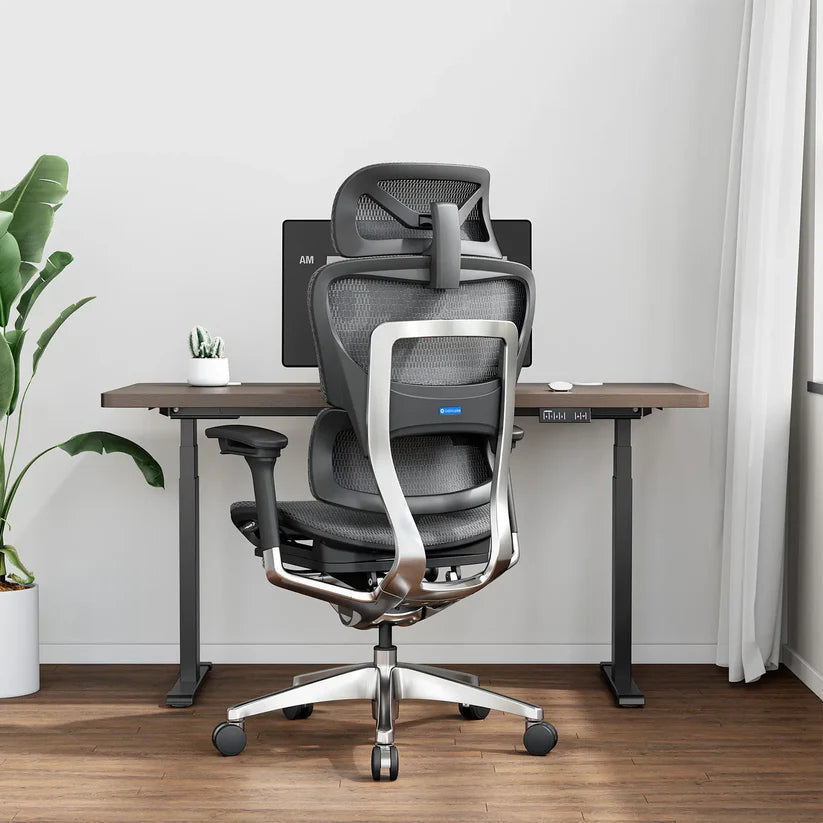
OdinLake's current O2 Ergo MAX 747 product record identifies a Class 4 gas lift, a 350-pound chair capacity, and BIFMA X5.1-2017(R2022). The site's 4.7-inch replacement-cylinder page names O1, O2, and O3 in the product title. That is the right level of specificity: use the exact chair record and an explicitly named compatible part, then follow current installation and support guidance.
Those facts should not be generalized to every OdinLake model, every production year, or another brand's chair. If the label on your chair does not match the listed models, confirm compatibility with OdinLake support before ordering or removing anything.
What to Do After a Suspected Failure
- Stop using the chair and prevent coworkers, children, or pets from approaching it.
- Do not manipulate an exposed or damaged cylinder and do not attempt to release pressure.
- From a safe distance, photograph the complete chair, model label, surrounding area, and visible damage.
- Preserve the chair and purchase information for the manufacturer, retailer, workplace safety contact, insurer, or investigator.
- Seek appropriate medical help if anyone was injured.
- For a U.S. consumer-product safety incident, report the product through SaferProducts.gov. The CPSC identifies that site as its online reporting channel.
The practical conclusion is calm but firm: a normal, undamaged gas-lift chair is designed for controlled height adjustment, not sudden release. You do not need to dismantle a chair out of curiosity. You do need to retire it from use when structural behavior changes, respect the exact load rating, and route pressurized-part questions to the manufacturer. If the only problem is a damaged caster rather than the cylinder or seat mechanism, use the office-chair wheel replacement guide to check compatibility before deciding on a repair.
Frequently Asked Questions
Can a gas-lift office chair really explode?
A gas-lift chair can suffer a sudden pressurized or structural failure, and official workplace guidance has documented failures that expelled parts. That is not the expected behavior of an undamaged chair and is not a fuel-burning explosion. Because reliable consumer incidence data is not available, inspect the specific chair and act on stop-use signs instead of relying on a universal probability.
Is a sinking office chair about to explode?
Not necessarily. Gradual sinking commonly points to loss of lift force or a worn seal, while abrupt dropping, wobbling, tipping, visible damage, or an altered cylinder is more concerning. Stop using a chair if its movement is unpredictable, and arrange model-compatible service rather than opening the cylinder.
What gas is inside an office chair cylinder?
Gas-spring makers commonly use compressed nitrogen; SUSPA states that its gas springs use nitrogen as the pressure medium. The exact construction belongs to the specific manufacturer, so do not assume a chair cylinder can be opened, vented, or refilled.
Are Class 4 gas lifts safer?
Class 4 is useful model information, but the phrase alone cannot verify the safety of a complete chair. Check the exact chair's load rating, applicable test standard, manufacturer documentation, part compatibility, and current condition. Avoid sellers who use "Class 4" while omitting the chair model and evidence behind the claim.
Can heat make a gas cylinder dangerous?
Heat can affect pressure and seals, and gas-spring manufacturers warn against heating a pressurized unit. Keep the chair away from fire, welding, high-heat tools, and abnormal storage conditions. If a cylinder has been exposed to significant heat, do not test it by sitting on the chair; contact the manufacturer.
Can I replace an office-chair gas lift myself?
Only if the chair maker provides a compatible replacement and instructions you can follow without opening or damaging the cylinder. A seized, deformed, unknown, or visibly damaged assembly should be handled through the manufacturer or a qualified service provider. Never drill, heat, or cut a cylinder to remove it.
Can a gaming chair have the same gas-lift risk?
Yes, if it uses a pneumatic gas-lift cylinder, the same pressurized-component principles apply. "Gaming" describes the chair's category or styling, not a different law of physics. Verify that model's rating, cylinder, test claims, recall status, and replacement instructions.