An evidence-based U.S. guide to the medical-purpose test, plan documentation, LMN requirements, receipts, fit checks, and reimbursement risks for an office-chair purchase.
The right ergonomic setup should adapt to your body, support frequent movement, and stay comfortable through a full workday.
An ordinary office chair bought for comfort or general wellness is not automatically an eligible HSA or FSA expense. A chair may qualify in some circumstances when it is used primarily to treat or alleviate a specific diagnosed medical condition and the account or plan accepts the required documentation. Confirm the rules with your HSA custodian or FSA administrator before you buy; a product being labeled “ergonomic” does not make it eligible by itself.
This guide was reviewed on August 27, 2026, for U.S. readers. It explains a practical verification process, not a reimbursement guarantee or individual tax or medical advice. Plan documents, administrator procedures, and tax rules can change.
Why the answer is conditional—not a simple yes or no
The federal medical-expense test focuses on purpose. IRS Publication 502 says medical expenses must be primarily for the diagnosis, cure, mitigation, treatment, or prevention of disease, rather than merely beneficial to general health. It also says an item ordinarily used for personal or living purposes is generally excluded unless it is used primarily to prevent or alleviate a physical or mental disability or illness.
That distinction matters because an office chair is also ordinary furniture. Buying one because it feels better, looks professional, or makes a home office more pleasant is usually a general-purpose purchase. A clinician's recommendation tied to a specific condition can support a medical-purpose case, but the plan or account rules still control what documentation is accepted.
| Purchase situation | Practical expectation | Next action |
|---|---|---|
| You want a more comfortable chair for long workdays. | General comfort alone normally does not establish a qualified medical purpose. | Use ordinary funds unless your administrator confirms another basis. |
| A clinician recommends specific chair features for a diagnosed condition. | The purchase may be conditionally eligible, subject to plan rules and documentation. | Ask for the administrator's exact requirements before ordering. |
| The chair has “ergonomic” in its product name. | The label alone proves neither medical necessity nor eligibility. | Evaluate medical purpose and required records, not marketing language. |
| Your benefits card accepts the transaction. | Card approval is not necessarily a final eligibility determination. | Keep the supporting records and confirm how the expense will be substantiated. |
HSA and FSA rules overlap, but the purchase process differs
Both accounts generally look to the federal definition of qualified medical care, yet they do not work the same way. IRS Publication 969 explains that an HSA distribution is tax-free only when used for qualified medical expenses. The HSA owner must keep records showing the distribution paid or reimbursed an eligible expense, was not reimbursed elsewhere, and was not also taken as an itemized deduction.
A health FSA is employer-sponsored. You submit a claim under that particular plan's procedures. HealthCare.gov advises participants to provide proof of the medical expense and a statement that it was not covered by the health plan, and to ask the employer how the specific FSA works.
| Question | HSA | Health FSA |
|---|---|---|
| Who carries the compliance risk? | The account owner is responsible for whether a distribution is qualified and for retaining records. | The plan administrator reviews the claim under the employer plan's rules. |
| What timing matters? | The expense must be incurred after the HSA was established; retain proof if reimbursing yourself later. | Plan-year, claim, and run-out deadlines may apply. Ask before purchase. |
| Can documentation be requested? | Yes. Records are needed to support the tax treatment of the distribution. | Yes. The administrator may require a claim form, itemized receipt, and medical-necessity documentation. |
As one concrete example—not a rule for every employer plan—FSAFEDS lists ergonomic home-office furniture used to treat a medical condition as eligible with appropriate documentation. Its listing calls for a doctor-signed Letter of Medical Necessity (LMN) plus a detailed receipt. Your own plan may define the form, information, renewal period, and submission timing differently.
Ask five questions before shopping
Contact the administrator with a neutral description of the proposed expense. Do not ask only whether “ergonomic chairs are covered”; that wording leaves out the medical-purpose and documentation questions that decide the claim.
- Does this plan treat an office chair prescribed or recommended for a specific diagnosed condition as conditionally eligible?
- Is prior approval required? A later letter may not cure a purchase made before the plan's required process.
- Do you require your own LMN form? Ask what the clinician must state and how long the approval remains valid.
- Can the full price qualify, or only an incremental medical cost? IRS Publication 502 notes that, for some personal-use items purchased in a special form to accommodate a disability, the includible medical expense may be the excess over the normal version. Whether and how that principle applies to a particular chair should be confirmed with the administrator or a tax professional.
- What proof must accompany the claim, and what is the deadline? Request the answer in writing or save the relevant plan page.
If the representative cannot decide from a general description, ask whether the plan will review the clinician's letter and a product specification sheet before purchase. A cautious “we need more information” is different from approval.
Build a documentation file that explains the purchase
A strong file connects the medical need to the selected features without making the retailer responsible for the diagnosis. Depending on the plan, it may include:
- the administrator's written eligibility or preapproval instructions;
- a completed LMN or other clinician documentation naming the diagnosed condition, recommended duration, and functional features needed;
- an itemized receipt showing the purchaser, seller, date, product, and amount paid;
- the product page or specification sheet available at the time of purchase;
- a cost comparison if the administrator asks you to establish an incremental medical cost; and
- records showing the expense was not reimbursed by insurance or another account and was not deducted again.
The clinician should describe the medical rationale; the chair seller should describe the product accurately. A retailer invoice, a checkout category, or a generic statement that a chair is “good for your back” is not a substitute for medical-necessity documentation.
Choose a chair only after the required features are clear

Eligibility and fit are separate decisions. A chair could satisfy an administrator's documentation rule yet still be a poor physical fit. Conversely, a well-fitting chair does not become a medical expense automatically.
Translate the clinician's functional recommendation into features you can verify. Depending on the person and the recommendation, that might mean checking:
- minimum and maximum seat height;
- usable seat depth and any seat-depth adjustment;
- backrest and lumbar-support adjustment range;
- armrest height, width, and movement;
- recline controls and stable upright support;
- weight rating and user-height guidance; and
- return, warranty, and replacement-part terms.
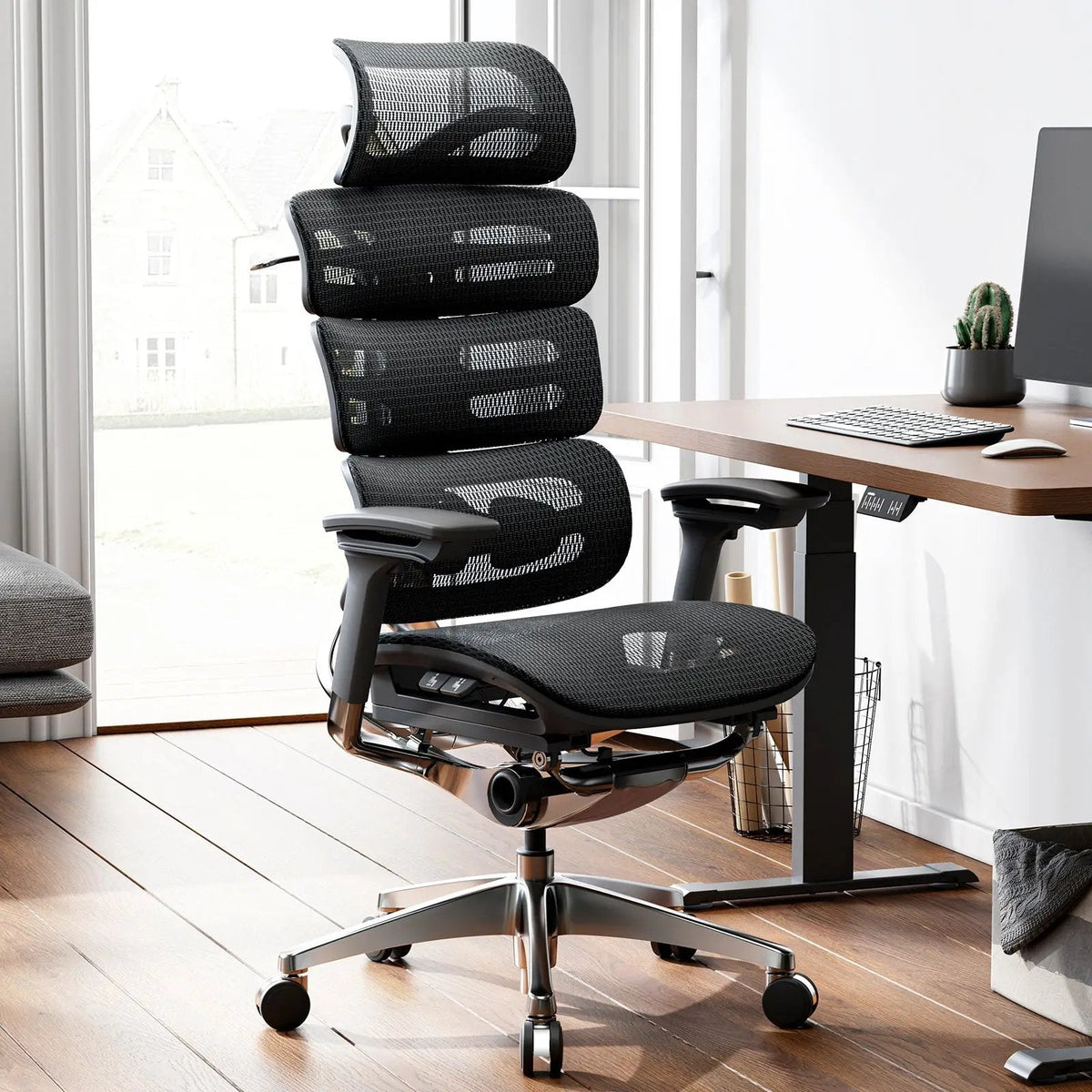
Compare those needs against the exact model specifications rather than a category label. OdinLake's ergonomic chair buying guide explains the major fit and adjustment factors. You can then compare current models in the ergonomic chair collection or review a specific product page, such as the OdinLake O2, for dimensions and controls. These pages help with product selection; they do not establish HSA or FSA eligibility.
Before ordering, save the product page and ask any model-specific questions through OdinLake customer support. If a plan requires a specific invoice field or supporting document, confirm that it can be supplied. Do not assume a retailer can issue an LMN or approve a claim.
Use a two-gate decision: eligibility first, fit second
This sequence keeps a benefits decision from being confused with a furniture decision:
- Define the medical-purpose requirement. Obtain the administrator's documentation checklist and the clinician's specific functional recommendation.
- Confirm the claim path. Learn whether prior approval, direct card payment, or reimbursement is permitted and what deadline applies.
- Shortlist chairs by measurable fit. Compare the required features with published dimensions, adjustment ranges, and policies.
- Submit or preserve the evidence. Follow the plan's instructions and retain the LMN, receipt, product details, correspondence, and reimbursement record.
Stop before purchase if the administrator will not clarify the process, the clinician's recommendation is too general to match a product, or the chair's relevant dimensions cannot be verified. Paying with an HSA card is not a safe substitute for resolving those questions.
Claims that should make you pause
- “Every ergonomic chair is HSA/FSA eligible.” Eligibility depends on medical purpose, account or plan rules, and documentation.
- “A doctor's note guarantees reimbursement.” An LMN can support a claim, but the administrator still applies the plan terms.
- “If the card works, the purchase is approved.” Payment authorization and final substantiation are not necessarily the same event.
- “You can reimburse the purchase twice.” IRS rules prohibit treating the same expense as tax-free HSA reimbursement and also claiming it as an itemized medical deduction; other duplicate reimbursement is also restricted.
- “The full price always qualifies.” Some personal-use-item situations may require an incremental-cost analysis.
Frequently asked questions
Can you use HSA funds for an ergonomic office chair?
Possibly, but not because the chair is called ergonomic. The expense must meet the qualified-medical-expense rules, generally by being primarily connected to treatment or alleviation of a specific condition rather than general comfort. Keep the records required by IRS Publication 969 and confirm uncertain facts with the HSA custodian or a qualified tax adviser.
Are ergonomic office chairs FSA eligible?
They may be conditionally eligible under some health FSA plans when used to treat a medical condition and supported by the required documentation. Ask your employer's FSA administrator for the plan-specific rule, LMN form, prior-approval requirement, and claim deadline.
Do I need a Letter of Medical Necessity for an office chair?
Many plans that treat ergonomic furniture as conditionally eligible require an LMN, but the administrator decides what form and information are acceptable. FSAFEDS, for example, requires a doctor-signed LMN and a detailed receipt for ergonomic home-office furniture used to treat a medical condition. That example does not bind every FSA.
Can I buy the chair first and request reimbursement later?
Do not assume so. An FSA may have prior-documentation and plan-year deadlines. For an HSA, the expense must actually be qualified, must have been incurred after the HSA was established, and must be supported by retained records. Confirm the purchase and reimbursement sequence before ordering.
Is the entire chair price eligible or only the extra cost?
It depends on the facts and the administrator's interpretation. IRS Publication 502 describes an excess-cost rule for certain ordinary personal-use items bought in a special form to accommodate a disability. Ask whether your case requires comparing the selected chair with a normal version and what evidence will establish that comparison.
What happens if an HSA purchase is not a qualified medical expense?
The distribution is generally taxable. IRS Publication 969 says a nonqualified HSA distribution may also face an additional 20% tax, with specified exceptions such as distributions after age 65, disability, or death. Keep records and obtain tax advice when eligibility is uncertain.
Sources reviewed: IRS Publication 502, IRS Publication 969, IRS medical-expense FAQ, FSAFEDS ergonomic-expense listing, and HealthCare.gov FSA guidance. Reviewed August 27, 2026.